


Coworkers at Ramp / Summer 2026
Agents are doing more work on peoples behalf, but their work is done in a black box.
I shipped a flexible pattern for reviewing work that an agent has done and scaled it across all of Ramp’s surfaces.


Agents are doing more work on peoples behalf, but their work is done in a black box.
I shipped a flexible pattern for reviewing work that an agent has done and scaled it across all of Ramp’s surfaces.
Prototyping can feel like drowning in a mess of sliders.
I built Bento: an organizational framework for code controls that lives in your agentic IDE. SVSD finalist out of 800 people.

Game creators waste hours travelling across their worlds and often lose track of where things are in large projects
I led 0→1 design of various new tools to improve traversal, spatial awareness, and collaboration for 12M+ Builders.

Every year, millions lose sleep planning for the IB and SAT. I designed an easy, organized, and fun way to plan and study.
At Dojo, I led design across product, web and art direction to ship the mobile app to 500k students in one month.

I led an end-to-end vision for insurance quoting in 2030 for the largest provider in Canada and pitched to the VP.
My ideas for product strategy and redesigned flows were implemented into Intact’s roadmap!

Digital relationships are easier to maintain than ever but this often impacts motivation to meet new people face-to-face.
While digital connection is positive, it’s not a substitute. I designed Bump to reduce anxiety of meeting new people.


I’m Keyan. I like to spend my time being excited by life and bringing excitement to people. This takes form as exciting teammates through stories and visions. It also takes form in giving people more time to enjoy their lives.
I’m interested in creating a world that is a joy to live in.
In my work and life I most value thoughtfulness, articulation, and making. Right now, I’m making a board game.

Ramp / Product Design Intern
2026

Revisiondojo (YC F24) / Product Design Intern
2025

Roblox / Product Design Intern
2025

Royal Bank of Canada / Interaction Design Intern
2025

Intact / Product Design Intern
2024
Understanding is the real work. It is much easier to think, articulate and build when you can see clearly.
Being able to break down a problem and make sense of a complicated system is important.
I think I’m growing a sense for when I understand something well and when I don’t. When I don’t understand something well, it helps to articulate it.
If you can’t explain something, you don’t understand it well enough. I like to write, talk to people, and get grilled by robots. Once you understand something, you can articulate it to others.
Designers are communicators at their core. Storytelling is incredibly valuable, and it’s fun too! I enjoy working on things end-to-end and I love to see people light up and become engaged with my ideas.
Engagement is how an idea gets built.
I build my ideas early and openly. And I make lots of them. It’s easier to communicate that way.
Ideas don’t need to be correct or perfect. But they do need to be in people’s hands. A wrong answer is a signal for the right direction and a stage for feedback.
Leah taught me that feedback is a gift.
I am not an engineer.
If prompting makes you an engineer then speaking makes you a politician.
Becoming an amazing engineer takes a huge amount of time and effort that should be respected. It’s rude for designers to slip on their title like a cheap pair of sliders.
Worse than that, we discount the unreal potential that a masterful designer has. Designers and artists should be the ones to shape our world.
That being said, a designer who can code, like for real, is invaluable to any team. I study the fundamentals of engineering because it makes me a better designer. And if I do choose to lean towards engineering, I can wear the title proudly.

What inspires you?

What is your skillset / main thing?


Coming soon! Leaving this here to force myself to post.

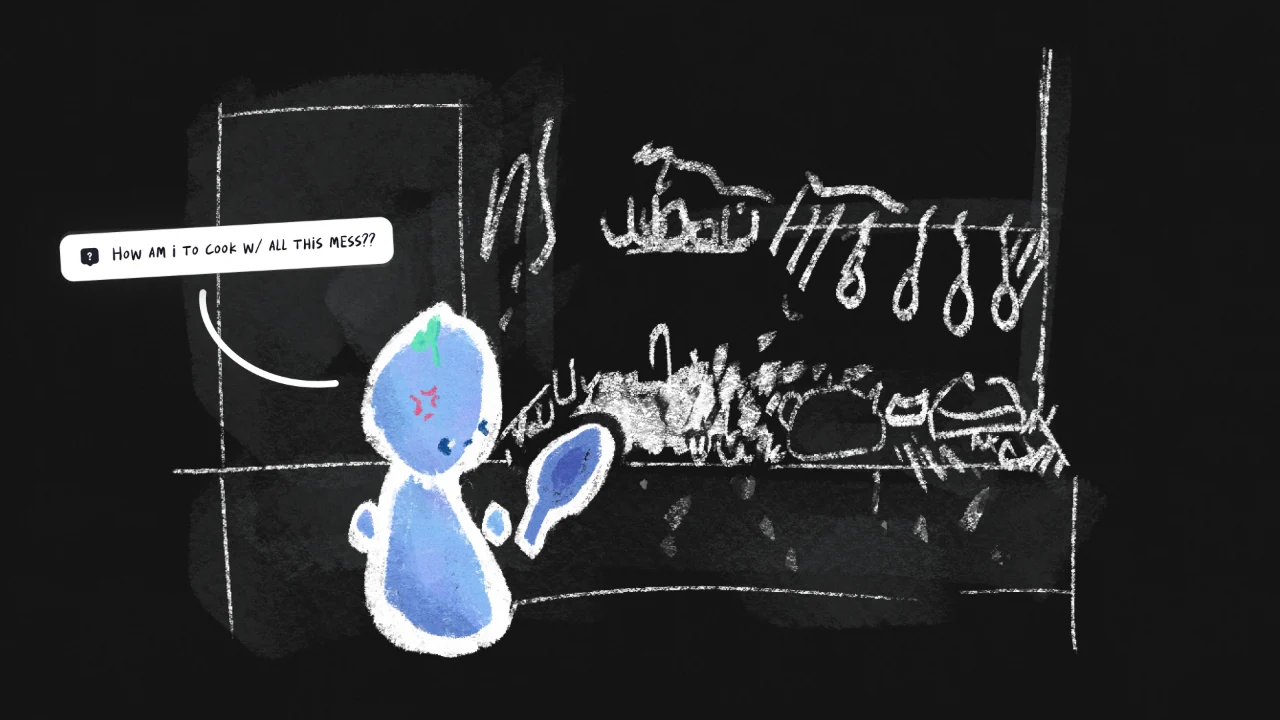
Prototyping can feel like drowning in a mess of sliders. I built Bento: an organizational framework for code controls that lives in your agentic IDE.
Code sliders pile up into huge, unorganized libraries. People waste time searching for the controls they need instead of making.
People also feel hesitant to add more controls to the pile, opting to prompt instead, sacrificing control and personalization.
Loading video… Watch on YouTube
At Ramp, I learned to break down a problem, understand its levers, and articulate it to collaborators. I spent the summer building agentic patterns and scaling them across all of Ramp, including the frontier products Stack and Glass.
I’m forever grateful for the opportunity to work so close with my design heroes :)))
 This project is under NDA :<
Agents are doing more work on people’s behalf. People need a way to review their work.
On Ramp, users see dozens of inconsistent agents that support everything from expense management to deep knowledge work.

A single surface for reviewing the work an agent has done, scaled across all teams at Ramp.
I worked closely with 8+ designers to understand their domain and users and support in adopting the review surface.
I also built an internal tool, agentic framework, and skill to enable designers to pick up my project with one install.
At Roblox, I supported creators in building large worlds by designing a new Minimapping framework paired with a suite of cohesive tools. I learned to think through an intricate and ambiguous system.
This project is password protected
View slides
This project is under NDA :<


When looking for feedback, assume partners know nothing of your projects and give full context. Due diligence before meetings leads to quality feedback and discussions.
Trust yourself, your ideas, and your design decisions. Believe in them, defend them, and seek people to prove you wrong. Be proactive! Build out your ideas, get your hands dirty, and don’t be afraid to pivot.


At Dojo, I learned to move a project forward independently and bias for action. I wore many hats to lead design across product, web, and art direction.


At Intact, I learned to design for growth on the customer acquisition team. The vision project I led taught me to see the customer journey holistically and imagine how it could be. Then to get buy in.
This project is password protected
Visit slides
What opinions do we have on how technology will develop by 2030? How can that insight be used to transform the insurance experience?
I researched trends and industry needs, redesigned the end-to-end experience, and pitched my vision to Intact’s VP.
My ideas for product strategy and redesigned flows were implemented into Intact’s roadmap!
If you want to create something innovative it requires deeply understanding and analyzing the underlying problems and system.
Know how to sell. Understand your stakeholders’ goals and create a compelling case by providing evidence.


Happy autumn :)


